
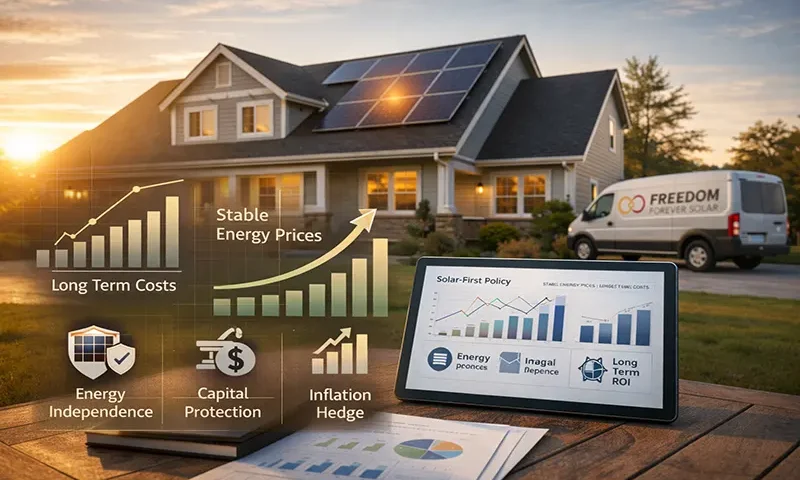
Across America, homeowners, businesses, and local governments are redefining what energy independence means. It is no longer only about the source of power, but about how that power is produced, managed, and sustained within communities. Freedom Forever Solar, one of the nation’s leading residential solar providers, operates within this transition every day. Each installation contributes to a more resilient and self-reliant energy economy, where households generate dependable power and keep economic value close to home.
The financial logic behind this movement begins with policy. Well-designed solar incentives and investment frameworks give families and communities the confidence to adopt clean energy. Stable, ongoing programs strengthen both local economies and long-term energy security by supporting steady growth across the clean energy sector. When policy remains consistent, it helps sustain employment, enhance regional resilience, and reduce exposure to supply disruptions and price volatility.
Energy Independence as Economic Strength
True energy independence begins at the local level. When community members produce their own electricity through solar systems, they reduce dependence on distant sources and stabilize costs for households and businesses. This local generation creates a ripple effect, keeping money circulating within neighborhoods and fostering a self-sustaining economic loop.
Incentives that support solar adoption encourage sustainable growth. They help families manage installation costs, provide local contractors with steady work, and allow utilities to strengthen and diversify their energy supply. When structured effectively, these programs do more than power homes; they reinforce community resilience and contribute to national energy stability.
The Link Between Incentives and Stability
Incentives play a central role in transforming clean energy goals into practical results. By lowering financial and administrative barriers, they make renewable power more accessible to families and businesses. Their influence reaches beyond individual savings, creating predictability across the broader energy system. When incentives are stable, companies can plan responsibly, manufacturers can maintain production, and the clean energy supply chain operates with greater consistency and confidence.
Freedom Forever reviews often highlight the peace of mind that comes with energy independence. They note how stable energy costs and professional installation services have added predictability to their budgets and daily lives.
How Solar-First Policy Strengthens Local Economies
A solar-first approach prioritizes investment in distributed generation. Power is produced close to where it’s consumed. This strategy strengthens local economies by keeping more energy dollars within communities. Each solar installation supports electricians, roofers, inspectors, and suppliers whose earnings stay in local circulation.
Communities benefit from greater energy stability and resilience when more households generate their own power. Local generation reduces strain on the grid and strengthens reliability during periods of high demand or severe weather. This distributed approach shows how national progress grows from local coordination. Each solar project reflects the combined effort of professionals, policymakers, and residents working together to build both economic and environmental stability.
Incentives as a Tool for Long-Term Security
While incentives often focus on affordability, their deeper value lies in their ability to drive structural change. When households and businesses invest in solar systems, they create distributed power sources that enhance national energy security. This distributed infrastructure reduces the strain on centralized plants and transmission networks. It diversifies energy production, ensuring that supply disruptions in one area don’t cascade across the entire system.
Widespread adoption of clean energy strengthens and balances the national grid. Data and performance monitoring play a crucial role in maintaining reliability, enabling utilities and communities to manage energy generation more efficiently across a decentralized network.
Workforce Stability Through Policy Continuity
The strength of the clean energy sector depends on consistency. Stable incentives and predictable policy frameworks allow skilled professionals to plan their work with confidence and maintain steady progress on projects nationwide. When programs remain reliable, training initiatives stay active, contractors can manage schedules effectively, and communities benefit from the continuity of expertise that supports local energy infrastructure.
Stable policy protects the experience and technical skills that keep clean energy systems running effectively. Long-term frameworks give workers and contractors the consistency needed to maintain projects, uphold quality standards, and support the reliability of the nation’s energy network.
Infrastructure Renewal Through Clean Energy Investment
Solar expansion contributes directly to modernizing America’s energy infrastructure. Each rooftop system represents an upgrade in how electricity is generated, distributed, and consumed. Over time, this modernization improves grid efficiency, reduces transmission losses, and enhances reliability.
As solar adoption grows, utilities are also adapting. They are integrating storage technology, smart meters, and advanced management tools that make the grid more flexible. These improvements are often funded and accelerated by steady incentive programs that encourage public and private investment. The installations contribute to this modernization. By delivering efficient, interconnected systems, the company helps build the infrastructure needed to support long-term clean energy growth.
Resilience Through Predictable Policy
Stable solar incentives provide more than financial certainty; they strengthen resilience. Communities that generate their own clean power are better prepared to manage disruptions caused by severe weather or supply constraints.
This reliability offers homeowners peace of mind. It serves as a safeguard for the broader economy against energy disruptions that can impact productivity and growth. Financial stability and energy independence are closely connected, and both depend on long-term policy consistency. When reliable systems and steady incentives work together, they create the foundation for a self-sufficient, resilient energy future.
The Case for a Solar-First Future
A solar-first policy isn’t about replacing one energy source with another, and it’s about creating balance. By investing in widespread solar adoption, the nation builds a diversified, resilient, and locally rooted energy economy. Stable incentives ensure that this transition benefits not only the environment but also the workers, families, and businesses that make it possible.
A solar-first policy is ultimately a policy of stability. It strengthens national resilience, protects households from volatility, and creates a foundation for lasting energy security. When incentives remain steady and implementation is consistent, progress follows naturally. Freedom Forever’s experience within this evolving landscape reflects how reliable practices and clear policy can turn long-term energy goals into lasting economic strength. The future of clean energy depends on maintaining that balance, where steady policy and practical action work together to deliver reliable power, financial stability, and lasting value for American households.

