
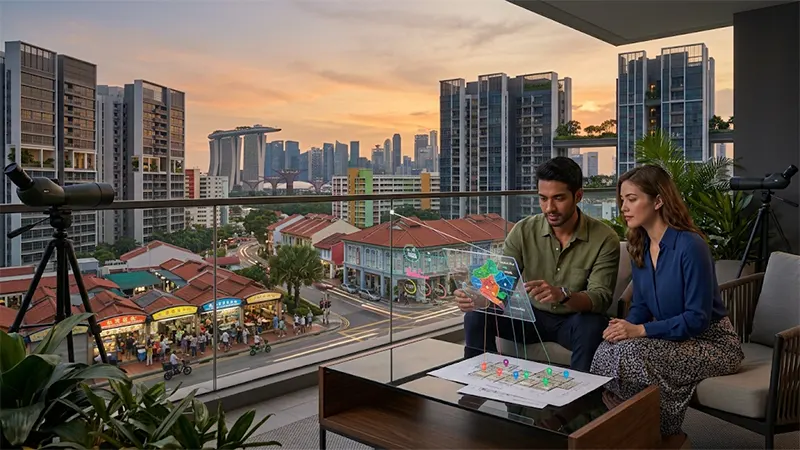
How Singapore’s Neighbourhoods Influence Modern Residential Living
When people search for a new home in Singapore, the property itself often receives most of the attention. Buyers compare floor plans, facilities, layouts, prices and architectural designs before making a decision. Yet one of the most important parts of the home-buying process exists outside the development’s boundaries: the neighbourhood.
A residential address can influence how people commute, shop, spend their weekends, access schools and enjoy leisure time. For this reason, understanding the character of a neighbourhood is an important part of researching Singapore real estate.
Singapore’s urban environment is particularly interesting because residential communities are often closely connected to public transport, commercial centres, parks, schools and other facilities. This creates opportunities for residents to organise many aspects of daily life within a relatively compact area.
What Makes a Neighbourhood Suitable for Residential Living?
There is no universal formula for choosing the right neighbourhood. Different households have different priorities.
A young professional may prefer quick access to business districts and restaurants, while a family may place greater importance on schools, supermarkets and parks. Retirees may prefer quieter surroundings with convenient access to healthcare and public transport.
The first step is therefore to understand personal requirements.
Instead of asking whether a neighbourhood is generally good, buyers can ask whether it is suitable for their own routine. This creates a much more useful way of comparing residential locations.
For example, someone who travels by MRT every day should investigate railway connections and walking routes. A household with young children may need to … READ MORE ...
