
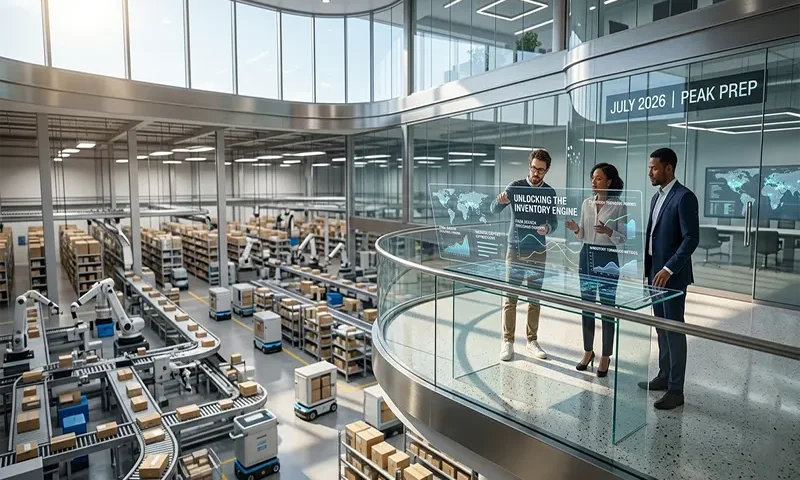
In the e-commerce landscape of 2026, the old adage “Cash is King” has been updated: “Liquidity is King.” As global supply chains have shifted from “Just-in-Time” to a “Just-in-Case” buffer model due to persistent shipping volatility, the average e-commerce brand now has more capital “frozen” in warehouses than ever before.
Success in 2026 is no longer just about having a viral product; it’s about mastering the Cash Conversion Cycle (CCC). The “E-commerce Paradox” remains: the faster you grow, the more cash-poor you become, as you must fund the next massive production run before the revenue from the previous one has even cleared your processor. To scale without breaking, founders are turning to a new generation of flexible, data-integrated funding solutions.
I. Asset-Performance Lending: The New Warehouse Reality
Traditional banks historically viewed inventory as a “risky” asset, often requiring heavy personal guarantees. In 2026, the rise of Asset-Performance Lending has changed the game.
Modern lenders now integrate directly with your 3PL (Third-Party Logistics) and Inventory Management Systems (IMS) via API. By monitoring real-time SKU-level performance, sell-through rates, and aging inventory, lenders provide revolving lines of credit backed by the actual value of the goods sitting in your warehouse.
This is particularly vital for omnichannel brands. If your “Hero SKU” is trending on TikTok Shop, an integrated lender can see that spike in real-time and automatically increase your credit limit, allowing you to trigger a reorder before a stock-out occurs. In 2026, avoiding a stock-out isn’t just about sales; it’s about protecting your hard-earned SEO and algorithm rankings on platforms like Amazon.
II. Payout Acceleration: Bridging the Platform Gap
The fragmentation of e-commerce in 2026 has created a payout nightmare. A typical brand might be waiting 7 days for Shopify payouts, 14 days for Amazon, and up to 21 days for certain social commerce platforms. This delay creates a “choke point” for working capital.
Payout Acceleration solutions act as a bridge. These providers (often integrated directly into the marketplace dashboard) advance up to 80–90% of your sales the moment a tracking number is generated.
- The Strategic Advantage: Instead of waiting two weeks to get your money, you can reinvest that capital back into ad spend or raw materials the very next day.
- Supply Chain Finance (Reverse Factoring): Leading 2026 brands are also using “Reverse Factoring,” where a lender pays the manufacturer on the brand’s behalf. This allows the brand to negotiate “Early Payment Discounts” (often 2-3% off the invoice), which frequently offsets the entire cost of the financing itself.
III. The “Forecast-to-Funding” Loop
One of the most significant breakthroughs in 2026 is the link between AI Demand Sensing and capital costs. Lenders are no longer just looking at your credit score; they are looking at your Forecast Accuracy Score.
Brands that utilize advanced AI forecasting tools to predict demand with high precision are rewarded with a lower Cost of Capital. If your data proves that you have a 95% probability of selling through 5,000 units in 45 days, the perceived risk for the lender drops. This “Dynamic Funding” model allows for lower interest rates during peak seasons and flexible repayment schedules that mirror your actual sales velocity, ensuring that debt service never outpaces your cash receipts.
IV. Navigating the 2026 Peak Season: A Tactical Approach
As we approach the Q4 “Golden Quarter,” the pressure on working capital reaches its zenith. The 2026 playbook for peak season focuses on Capital Layering.
- Q3 (The Build): Utilize a fixed-term Inventory Loan or Supply Chain Finance to secure large production runs and lock in ocean freight rates early.
- Q4 (The Scale): Switch to Payout Acceleration to keep the “marketing engine” fueled. As sales pour in, the daily advances provide the liquidity needed for aggressive PPC and influencer campaigns.
- The Warning Sign: Beware of “Over-leveraging” based on hype. In 2026, lenders warn against borrowing against “fringe SKUs.” Keep your debt exposure tied to your “A-Grade” inventory—the products with the highest turnover and most reliable margins.
V. Founder’s Checklist for Inventory Funding Readiness
To secure the most flexible terms in today’s market, ensure your brand meets the following 2026 standards:
- Real-Time Data Visibility: Can you show a lender your inventory levels across all 3PLs in a single dashboard?
- Healthy Contribution Margin: Does your product have at least a 30% margin after COGS and shipping? Lenders shy away from “thin” margins that can’t absorb interest costs.
- Diverse Supplier Base: Do you have “Backup Manufacturers”? In 2026, supply chain redundancy is a key factor in risk assessment.
- Historical Sell-Through Proof: Be prepared to show at least 12 months of historical data proving your ability to move stock without heavy discounting.
The Competitive Edge of Flexibility
In the e-commerce world of 2026, the barrier to entry is low, but the barrier to scale is purely financial. The brands that are winning aren’t necessarily those with the largest bank accounts, but those with the most flexible capital stacks.
By treating inventory funding as a strategic tool rather than a “last resort,” founders can turn their warehouse from a cash graveyard into a high-velocity growth engine. In an era of shipping delays and platform volatility, the ability to stay in stock is the ultimate competitive advantage.

